




































Join On The Issues

Receive information and updates via email.

On You Tube

Visit On The Issues Magazine's YouTube Channel

Send us links to your favorite, progressive videos to add to our favorites

Featured Video:

Featured Video: Intimate Wars by Merle Hoffman
OTI Online
Volume 7, 1987

The Danger from Within & Out,
When not following a doctor's orders may result in criminal prosecution
by Merle Hoffman


Pamela Raie Steward Monson is a 27-year-old woman from San Diego, California, who has the dubious honour of being a "first". She is one of the first women in the nation to be criminally charged for "fetal abuse".

It seems that during her pregnancy, Pamela lived in a trailer camp with her husband and two children. Late in her pregnancy. Ms. Monson was told by her physician not to take illegal drugs, to stay off her feet, and to avoid sexual intercourse. Her doctor also told her that she was to seek immediate medical attention if she began to hemorrhage.

According to the brief filed against her, Ms. Monson ignored all of her doctor's warnings in the ninth month of her pregnancy and, as a result, Pamela Monson gave birth to a brain dead son, with amphetamines and barbiturates in his blood. The most important charge against Monson was that she failed to get to the doctor immediately after she began to hemorrhage.

According to reports, Ms. Monson suffered from placenta previa - a condition in which the fetus becomes separated from the placenta and, as a result is deprived of blood and oxygen. It is potentially fatal for the fetus and can also be potentially fatal for the woman who carries it.

The issues raised in Monson's case are of tremendous significance on multiple levels.

They involve power, autonomy and control - who controls women - who controls their movements - who controls their bodies - who controls their health care, and ultimately, who controls their concept of motherhood. There is of course the issue of just who is responsible for the fetus - the woman who carries it, the physicians whose care she is under, or the state? By opening up this question to a criminal action - doors may be open for all types of invasions of privacy - pregnant women may be monitored for smoking, excessive physical activity, exposing themselves to potentially dangerous chemicals on the job. excessive drinking, etc., etc.

Because there is an assumption of fetal rights - that is, that the fetus in utero exists apart from the woman, is an entity with rights and can be harmed - it follows that the fetus has legal standing as a potential litigant.

Physicians also enter this scenario as police-type enforcers - no longer are they to be viewed as facilitators, as professionals whose role it should be to offer the best of their expertise to their patients so that they can make up their own minds on an issue. No, now not following a physician's orders may result in criminal prosecution.

With the Monson case, the State has once again reinforced the negative concept of a woman at war with herself, a woman at war with her body, at war with her uterus, and ultimately, at war with her fetus. Frustrated by their inability to restrict or prohibit legal abortion, fetal rights activists, anti-choice theorists and allied members of the scientific community are attempting to create a "second patient" (the fetus). There is a real and present danger that any legal rights granted to this second patient (the fetus) will result in diminished civil and legal rights for the first patient (the woman). Indeed, a current example may be found in the occurrence of "forced Cesarean sections" - performed more for the presumed benefit of the fetus than concern for the mother.

Once again the people who argue for fetal rights make a poor case when there is no accompanying hue and cry for adequate pre-natal care. Why was this woman not seen by any physician during the first seven months of her pregnancy? Why was she the only one who was prosecuted? The man involved, the father, was not even mentioned in the suit, although he obviously was involved in the sex act. Nothing was said about the potential danger to the woman herself - placenta previa can be, and is, often fatal to the woman.

While there may be justified rage and anger at Monson for abrogating her responsibilities both to her fetus and to herself, we must not fail to recognize the source of her problem. With the dearth of adequate pre-natal programs for the poor, the high incidence of drug and alcohol use among women - particularly poor and depressed women. Pamela Monson and her brain dead baby can be viewed as the crowning result of an illogical and severely anti-natal society. If, in fact, Monson did understand the medical advice given to her and then by active or passive choice failed to follow instructions, she may indeed have made a bad choice - a choice that could be viewed as an attempted suicide. The bottom line here is that if we are to ascribe to the view that women are self-directed, self-created moral agents, Monson, not her doctor, not her husband and not the State has the right to make even the worst of choices.


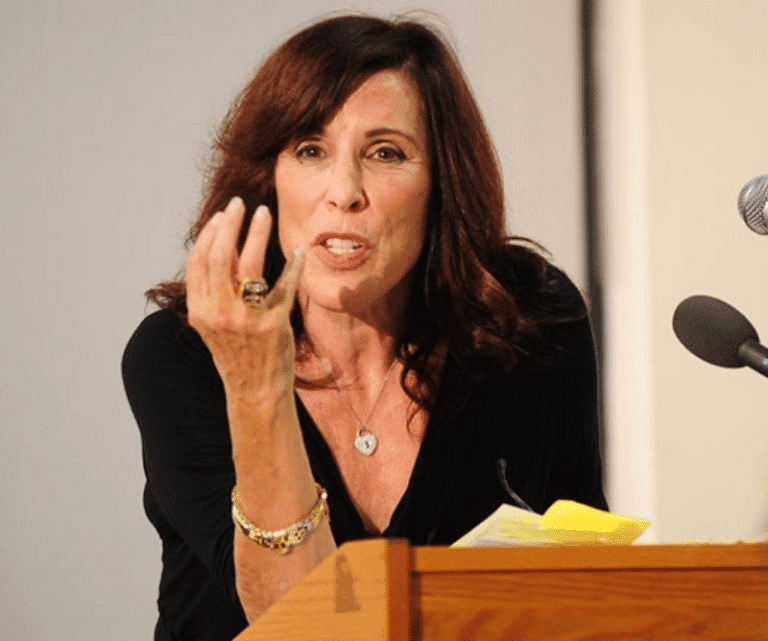
Merle Hoffman is publisher/editor-in-chief of On The Issues magazine and founder/president of both Choices Women's Medical Center, Inc., and Choices Mental Health Center.


The Cafe

deepening the conversations by continually adding the insights of progressive writers.

Newest titles:

Content on this page requires a newer version of Adobe Flash Player.

Get Adobe Flash player

We’re now taking comments!

Enter the Cafe
The Cafe at On the Issues Magazine

CURRENT ISSUE
Winter 2012

Realities of The Waiting Room: Constantly Shifting by Lori Adelman

Anti-Abortion Harassment and Violence Still Stifle Access by Eleanor J. Bader

We're Not Sorry. Still. by Jennifer Baumgardner

The Poet's Eye From Poetry Co-Editor Sarah Browning

Calling Black LGBTQ Institutions: Where Are You? Where is Reproductive Justice? by Jasmine Burnett

Privacy at Stake: Patients, Clinics and Electronic Medical Records by Corinne A. Carey

Can We Choose Move Forward on Reproductive Justice? -- And How? by Ayesha Chatterjee and Judy Norsigian

"Love Means Second Chances": Reproductive Freedom in a Novel by Susan Elizabeth Davis

Satirist's View: Same Old Dilemma, or The Virgin Rebirth by Susie Day

As Access Slides, Feminists Need to "Extract" From Our Self-Help Past by Carol Downer

Abortion: On The Issues Magazine - by The Editors

How Anti-Abortion Protesters Got Me: Letter From a Young Activist by Sarah Flint Erdreich

The Grand Folly of Focusing on "Common Ground" by Gloria Feldt

Before "Roe": Legal Battles, Involuntary Servitude, My Mom by Justine Goodman

Next Generation Access: Medical Students Fill A Void by Mary Lou Greenberg

The Power of Theater: "Words of Choice" Touches Hearts by Alexis Greene

Where the Reality of Abortion Resides: Intimate Wars by Merle Hoffman

Gone Too Far? Reproductive Politics in the Time of Obama by Carole Joffe

Lila Rose: A Sweet Face to Accompany Extreme Anti-abortion Claims by Kathryn Joyce

Glorifying the Fetus While Ignoring the Fetal Environment by Margie Kelly

Reframing Compassionate Care: Of Madame Restell and Other Outlaws by Jeannie Ludlow

Helping Bloggers To Help: Tips for Reproductive Health Organizations by Amanda Marcotte

What To Do When They Say Holocaust by Carol Mason

"Silent Choices": African American Women Open Up on Film by Faith Pennick

Fine Thoughts On Fertilized Personhood by Marge Piercy

Heading Toward Menopause, Still Caring about Abortion by Andrea Plaid

Letter to a Young Activist: Don’t Drop the Banner by Barbara Santee

Redefining Chutzpah: More Bad Ideas to Burden Women by Aram A. Schvey

Sharing the Wealth of Knowledge on Abortion by Ria Sen and The Feminist Press

An Abortion Miracle? Let's Try the First Amendment by Priscilla Smith

Related Stories: Bold Discussions of ABORTION in On The Issues Magazine by The Editors

The Art Perspective: Ursula O'Farrell curated by Linda Stein

Student Think Tank

Winter 2012 Index

Print page      Bookmark site      Rss Feed RSS Feed


©1983-2012 On The Issues Magazine; No Reuse without permission. • Complete Table of ContentsPrivacyLinks of Feminist and Progressive Interest