




































Join On The Issues

Receive information and updates via email.

On You Tube

Visit On The Issues Magazine's YouTube Channel

Send us links to your favorite, progressive videos to add to our favorites

Featured Video:

Featured Video: Intimate Wars by Merle Hoffman
OTI Online
Fall 1996

The Judge Who Got Off
by Joy Ward


It is time the Supreme Court sent a message that sexual abuse is a deprivation of federal civil rights.


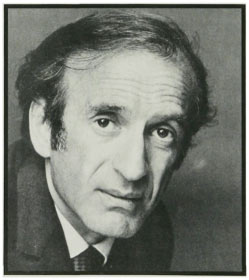
Judge David Lanier,
called by some "The Grabber."

This man
is a proven
sexual predator.
Why is the
Constitution
on his side?

One might reasonably assume that our federal civil rights include freedom from sexual harassment and molestation, but they don't. According to a recent court ruling, the Constitution offers no such protection.

The Sixth Circuit Court of Appeals decided, in a 9-to-5 opinion, that freedom from sexual assault is not covered by present federal civil-rights laws or the 14th Amendment to the Constitution. Instead, crimes such as rape, harassment, and molestation -- even if committed by sitting judges and uniformed law officials -- are to be referred for prosecution back to state courts.

But what happens when judges at the state level -- who should be prosecuting the guilty in their own ranks -- simply refuse to recognize the problems or carry out their duties? That's the crux of the case against former state judge David W. Lanier, of Dyersburg, Tennessee.

Lanier sexually assaulted eight women while serving as Chancery and Juvenile Court judge in Dyer and Lake counties. A federal grand jury convicted him in May 1992 of 11 counts of violating United States Code 242 -- the same law under which two Los Angeles police officers were convicted for beating Rodney King. It defines as criminal the "deprivation of any rights... protected by the Constitution" by any person acting under "color of law."

Judge Lanier's sexual assaults were clearly "under color of law." They varied from placing his hands on one woman's crotch while she sat next to him in court -- both blocked from view by his bench -- to repeated, forced oral sex with a young, divorced, unemployed mother, whom he blackmailed into silence by threatening to remove her child from her custody. The young mother had approached Lanier in her search to find a job. After Lanier assaulted her, she was passed off to and hired by a local medical doctor, with Lanier's strong suggestion to the doctor that she was sexually available. In fear of losing her child, the young woman endured repeated sexual harassment and involvement with the doctor.

None of the women abused by Lanier had any hope of legal recourse or equal protection under the law. They were afraid to come forward. They thought they would not be believed or supported. They feared losing their jobs or causing their families to lose theirs. Judge David Lanier was too powerful to cross. With but a few words, he could easily wreck their lives. The few women who did complain (to bosses or friends) were encouraged to keep silent. Most said nothing to anyone.

As detailed in Darcy O'Brien's 1996 Power to Hurt, the Lanier family ruled this northwestern corner of Tennessee with iron fists. Few people were willing to stand up to "Mr. Jimmy" Lanier, a local power broker and boss. When he passed on, his sons James and David took over control of Dyersburg. David served seven consecutive terms as mayor and in 1982 was elected Chancery Court judge, later gaining control of the Juvenile Court as well. In 1990 his brother James became the district attorney general. That's when the Lanier legacy first came under FBI scrutiny. The FBI was investigating James of suspected corruption when James died, and David came into view instead.

Lead FBI investigator Bill Castleberry happened upon complaints of sexual assault from numerous women who worked with, for, or around Judge Lanier (called by some "The Grabber"). Technically, it would have been appropriate for these cases to be tried at the state level, but because Lanier's brother James had been the district attorney, chances of indictment or conviction on the sexual-assault accusations were slim. Nothing happened in Dyer County that the Laniers could not control.

When the FBI investigation of James ended with his death, the FBI decided to go after David Lanier. Federal civil-rights statutes had never before been used to prosecute sexual harassment; but, eliciting testimony from Lanier's hitherto silenced victims, the U.S. Attorney's Office in Memphis carefully built a federal case they felt would put Lanier away for years. Lanier's blatant sexual harassment of women under his control, at times in his judge's robes or in official meetings, and Lanier's power to control the livelihood of those around him was a clear picture of a judge grossly abusing his power to deprive his victims of their civil rights.

At trial in a federal court, the prosecution argued that Lanier's abuse of the victims' constitutional right to bodily integrity "shocks the conscience." The local jury agreed and found Lanier guilty on seven counts. Lanier was sentenced to a minimum of 25 years with no possibility of parole. The case was appealed to the Sixth Circuit Court of Appeals and the conviction was upheld.

The women went back to their lives, still facing daily resentment and disbelief from other residents of this small Tennessee county. (As both Power to Hurt and several victims point out, there remains an attitude in Dyersburg that being "paid attention" by Lanier only meant he was "a hugger" or the victim herself had "wanted it.") Chillingly, from inside jail in Talladega, Alabama, Lanier continued to harass some of his victims. He telephoned them at home, via friends in Dyersburg.

Then the Sixth Circuit Court of Appeals did the unthinkable: In June 1995 they released Lanier and asked to hear his appeal again. The victims and the prosecutors were shocked by what happened next: The Court of Appeals overturned Lanier's conviction.

None of the judges questioned the facts -- that Lanier had sexually abused and terrorized his victims. At issue was whether these crimes are addressed under federal civil-rights statutes. They are not, according to Chief Judge C.J. Merritt of Nashville, who delivered the majority opinion. Even though the Lanier family had been Democratic party power brokers in a state that until recently had been overwhelmingly Democratic, the court majority felt that Lanier should have been charged in a state court. And the majority opinion went even further. Merritt expressed concern that "many public officials and employees have recently been accused of similar deviant conduct" and they might be prosecuted, for political reasons and possibly unfairly, under United States Code 242.

Handwringing on his accused brethren's behalf, Merritt wrote:

Permitting federal prosecutions for "conscience shocking" simple and sexual assaults committed by federal, state and local employees or officials places unparalleled, unprecedented discretion in the hands of federal law enforcement officers, prosecutors and judges.... Permitting such discretion is a particular risk for due process.

In overturning Lanier's conviction, the Sixth Circuit Court declared to the legal community under its jurisdiction that sexual crimes are not prosecutable under federal statutes codifying the 14th Amendment. And if state officials have no interest in prosecuting one of their own "good old boys"? Well, that's just too bad.

For now, David Lanier walks free in Dyersburg, aware that if his appeal stands, it is unlikely federal agencies will ever again attempt to bring similar cases to trial. And two victims who testified against him, Patty Wallace and Sandy Sanders, are fighting for his reincarceration. They are carrying the facts of the case, and the appeal, to the public. "We stood up. We did it. He got convicted. He got sentenced to 25 years," says Wallace. "Then he gets two chances before the board of appeals. It gets overturned. Now where are we? I mean, you want to encourage women and say you can stand up for it, you can do something right, but it's all crashed in on us. As far as the court system and all that, we don't have any faith in that at all. To me it is a joke."

Meanwhile the federal district attorney's office in Memphis has appealed the Sixth Circuit Court's decision to the Supreme Court, which has agreed to hear the case and consider reinstating Lanier's sentence. A decision is expected during the court's next term.

The Supreme Court has never before addressed whether the 14th Amendment's guarantee of equal protection under the law means that anyone has a federal right to be free of sexual harassment and abuse. It is time the court sent a clear message to the states and the lower courts that sexual abuse is an infringement of "bodily integrity" -- and it will no longer be relegated to the backrooms and good old boys at the state levels nor allowed to be swept under the statehouse rugs simply to protect a few men who do not understand or have forgotten that wearing a black robe or a uniform is not a license for abuse.


Joy Ward, M.A., M.S., is a writer and consumer-psychology consultant. Her columns are carried regularly by magazines in Memphis, Tennessee, and Fort Lauderdale, Florida.


The Cafe

deepening the conversations by continually adding the insights of progressive writers.

Newest titles:

Content on this page requires a newer version of Adobe Flash Player.

Get Adobe Flash player

We’re now taking comments!

Enter the Cafe
The Cafe at On the Issues Magazine

CURRENT ISSUE
Winter 2012

Realities of The Waiting Room: Constantly Shifting by Lori Adelman

Anti-Abortion Harassment and Violence Still Stifle Access by Eleanor J. Bader

We're Not Sorry. Still. by Jennifer Baumgardner

The Poet's Eye From Poetry Co-Editor Sarah Browning

Calling Black LGBTQ Institutions: Where Are You? Where is Reproductive Justice? by Jasmine Burnett

Privacy at Stake: Patients, Clinics and Electronic Medical Records by Corinne A. Carey

Can We Choose Move Forward on Reproductive Justice? -- And How? by Ayesha Chatterjee and Judy Norsigian

"Love Means Second Chances": Reproductive Freedom in a Novel by Susan Elizabeth Davis

Satirist's View: Same Old Dilemma, or The Virgin Rebirth by Susie Day

As Access Slides, Feminists Need to "Extract" From Our Self-Help Past by Carol Downer

Abortion: On The Issues Magazine - by The Editors

How Anti-Abortion Protesters Got Me: Letter From a Young Activist by Sarah Flint Erdreich

The Grand Folly of Focusing on "Common Ground" by Gloria Feldt

Before "Roe": Legal Battles, Involuntary Servitude, My Mom by Justine Goodman

Next Generation Access: Medical Students Fill A Void by Mary Lou Greenberg

The Power of Theater: "Words of Choice" Touches Hearts by Alexis Greene

Where the Reality of Abortion Resides: Intimate Wars by Merle Hoffman

Gone Too Far? Reproductive Politics in the Time of Obama by Carole Joffe

Lila Rose: A Sweet Face to Accompany Extreme Anti-abortion Claims by Kathryn Joyce

Glorifying the Fetus While Ignoring the Fetal Environment by Margie Kelly

Reframing Compassionate Care: Of Madame Restell and Other Outlaws by Jeannie Ludlow

Helping Bloggers To Help: Tips for Reproductive Health Organizations by Amanda Marcotte

What To Do When They Say Holocaust by Carol Mason

"Silent Choices": African American Women Open Up on Film by Faith Pennick

Fine Thoughts On Fertilized Personhood by Marge Piercy

Heading Toward Menopause, Still Caring about Abortion by Andrea Plaid

Letter to a Young Activist: Don’t Drop the Banner by Barbara Santee

Redefining Chutzpah: More Bad Ideas to Burden Women by Aram A. Schvey

Sharing the Wealth of Knowledge on Abortion by Ria Sen and The Feminist Press

An Abortion Miracle? Let's Try the First Amendment by Priscilla Smith

Related Stories: Bold Discussions of ABORTION in On The Issues Magazine by The Editors

The Art Perspective: Ursula O'Farrell curated by Linda Stein

Student Think Tank

Winter 2012 Index

Print page      Bookmark site      Rss Feed RSS Feed


©1983-2012 On The Issues Magazine; No Reuse without permission. • Complete Table of ContentsPrivacyLinks of Feminist and Progressive Interest