
































Join On The Issues

Receive information and updates via email.

On You Tube

Visit On The Issues Magazine's YouTube Channel

Send us links to your favorite, progressive videos to add to our favorites

Featured Video:

Featured Video: Intimate Wars by Merle Hoffman
OTI Online
Fall 2008

WOMEN AND THE WAR ON TERROR:
AN UNINTENDED CONSEQUENCE?
by Sallie Bingham


The statistics about violence against women in the United States have a deadly sameness that can numb minds and hearts: 95 thousand rapes a year and untold numbers of sexual abuse, often unreported. Both continue at record rates for a so-called “developed” country in spite attempts that began with the women’s movement of the early 1970s to develop shelters, programs, police education and public awareness.

When a social problem remains intractable, we should wonder whether violence against women, from the brutal teasing of little girls to their rape by relatives to their murder in basements and backyards, doesn’t work in some way to support the status quo.

The status quo in 2008 is the so-called War on Terror. Terror is written with a capital and advertised -- no other word will do -- throughout the media. Seven years are defined by the word “Terror” — War on Terror, Terrorists, Terrorist Threat. We should wonder if the institutionalization of terror in all its forms has begun, begetting a terrifying, if silent, acceptance.

Women Marching in the French Revolution

The idea of Terror has birthed an impressive string of names that span centuries: Tale of Terror, Reign of Terror, Holy Terror, and, more recently, Balance of Terror and Terror Bombing. The word came into mass circulation with the French Revolution — its root is an ancient French word, terreur -- “to frighten.”

The role of women early in that Revolution is an illuminating aspect of the French terreur. The spectacle of the Parisian Market Women’s March on Versailles on October 5, 1789 may have surprised some viewers of the recent Hollywood film Marie Antoinette. The March was joined by middleclass femmes a chapeaux, as well as by those whom historians call “fishwives.” Several thousand strong, they walked out of the capitol, having first informed the Mayor and representatives of the Commune that they were marching to protest the price of bread and would not allow men to join them.

They marched against famine. As in all the ages, these French women were the caretakers of small children, and their revolutionary fervor was perhaps more provoked by the spectacle of starvation than by the ideals of equality, fraternity and liberty.

This may seem remote from the issue of the War on Terror and its effects on women in the U.S. today, but I think there is a connection. Terror is women’s heritage.

Grimm Tales

From earliest childhood, our girls are exposed, as I was, to tales of terror such as Edgar Allen Poe’s Pit and the Pendulum, which left me screaming with nightmares, the horrors of unexpurgated Grimm Fairy Tales or the sexual ambiguities of Henry James’ The Turn of the Screw. I come from a literary family, but it is not only the claims made by “literature” to the power of frightening that exerts its force here. It is the hidden need to teach girls subservience -- perhaps to save their lives.

My mother called it “hardening” and considered it a lifesaving necessity, and while I never accepted her reasoning, the learned subservience is as real today as it was half a century ago.

My exposure to the “hardening” process continued in adolescence, where I was terrorized by my older brother’s sexual advances. Observers sometimes wonder why girls and women do not ask for help in these situations, but I remember, only too well, how unlikely it was that I could explain to my mother why I had spent the night locked in a bathroom when I was fourteen (the split second I had to lock the door on my brother is perhaps the most blessed split second of my long life.) It simply would have been impossible -- she would have blamed me for somehow inciting his attack, as she had blamed me for inciting his other, lesser attacks.

This account is all too familiar to girls and women, and I am one of the lucky ones who was able to avoid rape. But beyond abhorrence, I recognize the political importance of what happened to me, since it brought a bright, independent and potentially rebellious girl to heel.

It has taken me much time in therapy to understand how this early exposure to terror initiated me into silence and subservience, into accepting bullying husbands, careless lovers, and social injustices in their many forms. The women’s movement of the early 1970s is the sole reason I have been able to develop my voice as a writer and my willingness to fight oppression, for those kindred spirits restored my feistiness.

Stoking Social Subservience

How does all this relate to the political plane? To the degree that we can be persuaded that we live, always, on the edge of danger, that only conservative politicians can protect us, somehow, from terrorists who are always looking for ways to hurt us (the vocabulary is straight from our own nightmares), we are easy to convince, easy to rule, easy to control. For who would question authority, when authority protects us from what we all know exists on a personal level —molestation, rape, murder —and are led to believe exists on a world level, as well? Who will speak up against oppression, when oppression seems to be the price we must pay to avoid terror — the terror we, as women, know all too well?

The current threats to our democracy are promoted by the merchandizing of terror. Until we recognize this, all attempts at reform will fail. The bogeyman used to be under the bed or in the closet, but now we are told he also walks down the street with us, sits in the next cubicle, shops in the malls, waits inside our parked cars. Now, his skin is dark, and he carries some kind of bomb, but we already know him in another form.

There is no terrorist threat, as it is being sold to us day after day, year after year. Instead, what we should fear, and fear mightily, is the greed for ultimate power that will use any tool to cow the public—and especially, to cow women who already know something of the real terror we face at home or in the streets almost every day of our lives.

In the end, of course, we can’t escape the responsibility—terrorized, or not—of rising up. And we can do it.


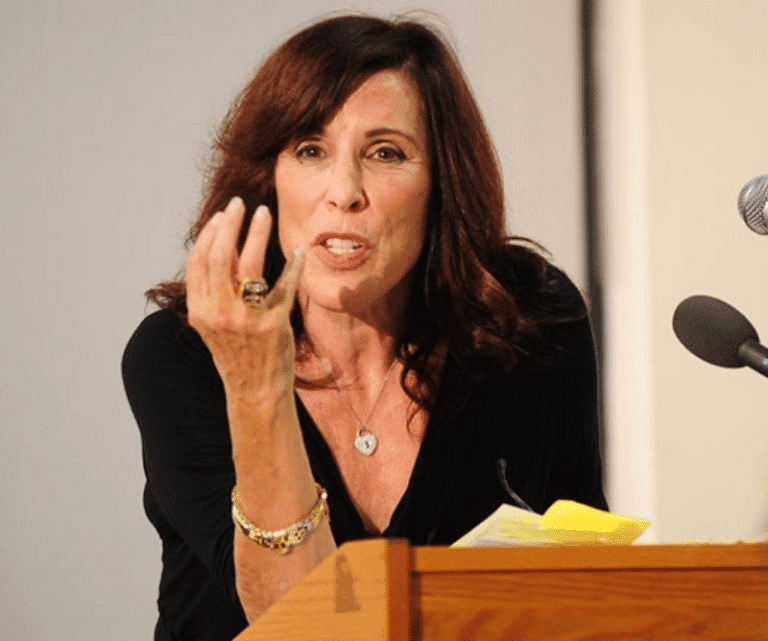
Sallie Bingham is a writer whose most recent book, a collection of short stories called Red Car, was published in 2008 by Sarabande Books. More about her work is at her website, www.salliebingham.com.

Also See: The War I Know: Sidelined, A to Z by Carolyn GAGE in this edition of On The Issues Magazine.

Also See: Lives Under Padding by Merle Hoffman

The Cafe

deepening the conversations by continually adding the insights of progressive writers.

Newest titles:

Content on this page requires a newer version of Adobe Flash Player.

Get Adobe Flash player

We’re now taking comments!

Enter the Cafe
The Cafe at On the Issues Magazine

CURRENT ISSUE
Winter 2012

Realities of The Waiting Room: Constantly Shifting by Lori Adelman

Anti-Abortion Harassment and Violence Still Stifle Access by Eleanor J. Bader

We're Not Sorry. Still. by Jennifer Baumgardner

The Poet's Eye From Poetry Co-Editor Sarah Browning

Calling Black LGBTQ Institutions: Where Are You? Where is Reproductive Justice? by Jasmine Burnett

Privacy at Stake: Patients, Clinics and Electronic Medical Records by Corinne A. Carey

Can We Choose Move Forward on Reproductive Justice? -- And How? by Ayesha Chatterjee and Judy Norsigian

"Love Means Second Chances": Reproductive Freedom in a Novel by Susan Elizabeth Davis

Satirist's View: Same Old Dilemma, or The Virgin Rebirth by Susie Day

As Access Slides, Feminists Need to "Extract" From Our Self-Help Past by Carol Downer

Abortion: On The Issues Magazine - by The Editors

How Anti-Abortion Protesters Got Me: Letter From a Young Activist by Sarah Flint Erdreich

The Grand Folly of Focusing on "Common Ground" by Gloria Feldt

Before "Roe": Legal Battles, Involuntary Servitude, My Mom by Justine Goodman

Next Generation Access: Medical Students Fill A Void by Mary Lou Greenberg

The Power of Theater: "Words of Choice" Touches Hearts by Alexis Greene

Where the Reality of Abortion Resides: Intimate Wars by Merle Hoffman

Gone Too Far? Reproductive Politics in the Time of Obama by Carole Joffe

Lila Rose: A Sweet Face to Accompany Extreme Anti-abortion Claims by Kathryn Joyce

Glorifying the Fetus While Ignoring the Fetal Environment by Margie Kelly

Reframing Compassionate Care: Of Madame Restell and Other Outlaws by Jeannie Ludlow

Helping Bloggers To Help: Tips for Reproductive Health Organizations by Amanda Marcotte

What To Do When They Say Holocaust by Carol Mason

"Silent Choices": African American Women Open Up on Film by Faith Pennick

Fine Thoughts On Fertilized Personhood by Marge Piercy

Heading Toward Menopause, Still Caring about Abortion by Andrea Plaid

Letter to a Young Activist: Don’t Drop the Banner by Barbara Santee

Redefining Chutzpah: More Bad Ideas to Burden Women by Aram A. Schvey

Sharing the Wealth of Knowledge on Abortion by Ria Sen and The Feminist Press

An Abortion Miracle? Let's Try the First Amendment by Priscilla Smith

Related Stories: Bold Discussions of ABORTION in On The Issues Magazine by The Editors

The Art Perspective: Ursula O'Farrell curated by Linda Stein

Student Think Tank

Winter 2012 Index

Print page      Bookmark site      Rss Feed RSS Feed


©1983-2012 On The Issues Magazine; No Reuse without permission. • Complete Table of ContentsPrivacyLinks of Feminist and Progressive Interest