



















Join On The Issues

Receive information and updates via email.

On You Tube

Visit On The Issues Magazine's YouTube Channel

Send us links to your favorite, progressive videos to add to our favorites

Featured Video:

Featured Video: Intimate Wars by Merle Hoffman
OTI Online Summer 2009 Busting Bogus Biology and Beliefs by Mahin Hassibi
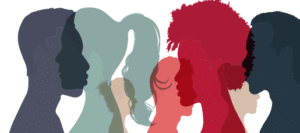
In our Summer '09 edition, On The Issues Magazine writers and artists discuss gender norms and differing perspectives of gender identity in Our Genders, Our Rights

Busting Bogus Biology and Beliefs
by Mahin Hassibi

The feminist movement began to raise questions about the cultural root of male supremacy

The simplified male-female concept of “gender” has never been simple. Unrelated to individual capabilities, “gender roles” throughout most of human history have subordinated the female to the male. In more recent years, reexaminations of “gender identity” along with developments in science and society have resulted in new understandings about what gender means to individuals. These developments, in turn, may reshape “gender roles.”

The binary categorization of gender as male-female is based on observed external male and female sexual characteristics.

But the binary categorization has very little to do with gender roles and the universal subordination of women to men. The subordination appears to derive from the difference in physical power of men and women. This was, of course, desirable for men, as well.

Pregnancy made it difficult for even young and physically strong women to resist physical domination by men. Men also made and utilized various weapons for hunting animals, extending their ability to subjugate and exploit women. Since the timing of pregnancy was not controllable for each individual woman, no collective, coordinated resistance was possible.

Subjugation by Myth

Cultural myths and religious beliefs reinforced and justified this division. For centuries, social constructs held that women owed allegiance and obedience to their husbands; children were the property of their fathers, who owned the children’s mothers.

More complex cultures developed more complicated reasons for maintaining the systems by which men subjugated women. Women were not only viewed as morally, intellectually and even emotionally inferior to men, but they became the agent of men's “downfall.” Pandora opened the box full of trouble; Eve was the author of the original sin.

The Enlightenment and the Age of Reason did not rethink or re-examine the prevalent ideas about women. Humanists did not question the inferior status of women. Even in Thomas More's Utopia, the women remained naturally inferior to men. Even though they were granted the ability to engage in constructive employment, that is, hard physical labor, the women were supposed to prostrate themselves before their husbands.

Studies of chromosomes in the second half of the19th century and the discovery and synthesis of sex hormones in the early 20th century seemed to put sexual differentiation on a solid biological ground. Freud relied upon these ideas to develop his theories of psychology, in which the inferior status of women did not change.

Modern Times Shake Up Old Notions

The feminist movement in the early 20th century began to raise serious questions about the cultural root of male supremacy. Then, following the civil rights movement of the '60s and inspired by feminist militancy, gays and lesbians began to refuse to accept the way in which same-sex sexual attraction and desire had been pathologized and declared a sickness that required various forms of treatment.

The news from the biological field also became more confusing and complex during the decades of the ‘50s and ‘60s. Studies of sex chromosomes found "meta-females,” that is, women who have one or more extra X chromosomes in each cell, making them triple X, or more rarely four or five Xs. Biologists also identified males with one extra X chromosome: they carried the genotype of XXY, or, more rarely, XXXY, XXXXY or XY/XXY mosaic.

Furthermore, psychologists and psychiatrists knew that some individuals experience deep and persistent dissatisfaction with their biological sex and undergo years of pain and suffering, as well as extensive medical and surgical intervention, to change their sex. Starting with the Second World War when women replaced men in heavy industry and hazardous jobs, the rigid ideas of gender roles became untenable. The loosening of sex-based criteria for jobs, including in the armed forces, provided evidence that women's place was not divinely designated, but literally manmade.

Recently, the last remnant of gender-specific function, that is, reproductive specialization, has undergone significant changes. People with a desire for parenting are now able to procure eggs and sperm from unrelated, and even unknown, individuals. Individuals can rent-a-uterus to nourish the lab-fertilized eggs to delivery. Advances in cloning, however controversial, may dispense with some steps in this process, as well. It is also not inconceivable that the uterine environment can be replicated in vitro, in the not too distant future, and the whole of reproduction processes take place outside the human body.

These converging developments will leave no solid basis in culture, society or psychology for gender role differentiation. Biologically, the majority of human beings will still be born with male or female sexual organs and sexual hormones, and it is likely that the hormonal differences will prove to have subtle influences on the brain and on psychological characteristics of the individuals, but the utility of maintaining the concepts of gender identity and gender roles will become untenable.

New categories and divisions will have to be made. Interpersonal relations will have to be based on factors other than the age-old customs, a revision that may create the new men and women so desired by utopian visionaries.


Mahin Hassibi is a Professor of Clinical Psychiatry (Ret.) at New York Medical College.

Also See of ”Ending the Male Patina in Biology” by Mahin Hassibiin the Winter 2009 edition of On The Issues Magazine.

See How A Feminist Found Her Sexism by Helen Boyd in this edition of On The Issues Magazine.

The Cafe

deepening the conversations by continually adding the insights of progressive writers.

Newest titles:

Content on this page requires a newer version of Adobe Flash Player.

Get Adobe Flash player

We’re now taking comments!

Enter the Cafe
The Cafe at On the Issues Magazine

CURRENT ISSUE
Winter 2012

Realities of The Waiting Room: Constantly Shifting by Lori Adelman

Anti-Abortion Harassment and Violence Still Stifle Access by Eleanor J. Bader

We're Not Sorry. Still. by Jennifer Baumgardner

The Poet's Eye From Poetry Co-Editor Sarah Browning

Calling Black LGBTQ Institutions: Where Are You? Where is Reproductive Justice? by Jasmine Burnett

Privacy at Stake: Patients, Clinics and Electronic Medical Records by Corinne A. Carey

Can We Choose Move Forward on Reproductive Justice? -- And How? by Ayesha Chatterjee and Judy Norsigian

"Love Means Second Chances": Reproductive Freedom in a Novel by Susan Elizabeth Davis

Satirist's View: Same Old Dilemma, or The Virgin Rebirth by Susie Day

As Access Slides, Feminists Need to "Extract" From Our Self-Help Past by Carol Downer

Abortion: On The Issues Magazine - by The Editors

How Anti-Abortion Protesters Got Me: Letter From a Young Activist by Sarah Flint Erdreich

The Grand Folly of Focusing on "Common Ground" by Gloria Feldt

Before "Roe": Legal Battles, Involuntary Servitude, My Mom by Justine Goodman

Next Generation Access: Medical Students Fill A Void by Mary Lou Greenberg

The Power of Theater: "Words of Choice" Touches Hearts by Alexis Greene

Where the Reality of Abortion Resides: Intimate Wars by Merle Hoffman

Gone Too Far? Reproductive Politics in the Time of Obama by Carole Joffe

Lila Rose: A Sweet Face to Accompany Extreme Anti-abortion Claims by Kathryn Joyce

Glorifying the Fetus While Ignoring the Fetal Environment by Margie Kelly

Reframing Compassionate Care: Of Madame Restell and Other Outlaws by Jeannie Ludlow

Helping Bloggers To Help: Tips for Reproductive Health Organizations by Amanda Marcotte

What To Do When They Say Holocaust by Carol Mason

"Silent Choices": African American Women Open Up on Film by Faith Pennick

Fine Thoughts On Fertilized Personhood by Marge Piercy

Heading Toward Menopause, Still Caring about Abortion by Andrea Plaid

Letter to a Young Activist: Don’t Drop the Banner by Barbara Santee

Redefining Chutzpah: More Bad Ideas to Burden Women by Aram A. Schvey

Sharing the Wealth of Knowledge on Abortion by Ria Sen and The Feminist Press

An Abortion Miracle? Let's Try the First Amendment by Priscilla Smith

Related Stories: Bold Discussions of ABORTION in On The Issues Magazine by The Editors

The Art Perspective: Ursula O'Farrell curated by Linda Stein

Student Think Tank

Winter 2012 Index

Print page      Bookmark site      Rss Feed RSS Feed


©1983-2012 On The Issues Magazine; No Reuse without permission. • Complete Table of ContentsPrivacyLinks of Feminist and Progressive Interest