Join On The Issues
Receive information and updates via email.
On You Tube
Visit On The Issues Magazine's YouTube ChannelSend us links to your favorite, progressive videos to add to our favorites
Featured Video:

Wonder Woman: A Comic Book Character Shows the Way
by Linda Stein
How does Wonder Woman do it? She is able to stop the bad guys—even convince them to reform—without ever killing. Her gender-bending strength and power is matched only by her compassion, as she fights for freedom and “thwarts the evil machinations of these destroyers of civilization.”

Text by Linda Stein
What can we learn from her? Can she be our contemporary role model in a world overwhelmed by violence? Can she help us confront sexism, racism, homophobia and other forms of bigotry and oppression? What would she say about our world today?
You protest, reader, because you know she had those magic wrist bracelets to deflect bullets and we mere mortals don’t have this defensive accessory, at least not in the literal sense.
Nor do we have her magic lasso to “convert” the bad guys. This she received from Aphrodite and Athena, who explain: “Having proved thyself bound by love and wisdom, we give the power to control others! Whomsoever thy magic lasso binds, minds obey thee.” Wonder Woman responds, “With its great gift, I can change human character; I can make bad men good, and weak women strong.”
And let’s not forget her invisible plane.
The themes underlying the Wonder Woman spirit were “Protection/Parity/Peace.” As an artist, these are ideas that I have often incorporated into my work. So perhaps it was inevitable that I would be drawn to Wonder Woman, and found myself referencing her in my art.
Created by William Moulten Marston in 1941, Wonder Woman was the “invincible enemy of injustice.” She was my role model as a kid, the only female superhero of the day, arriving a bit before I was born. I felt empowered by her strength and courage and inspired to be kind to my friends.
Marston, writing under the pseudonym of Charles Moulton, said “there isn’t enough love in the male organism to run the planet peacefully. What women presently lack is the dominance or self assertive power to put over and enforce her love desires. I have given (Wonder Woman) the dominant force but have kept her loving.”

Text by Linda Stein
In one Wonder Woman story, after rescuing Prudence, one of America’s pioneers of “Manifest Destiny,” Wonder Woman teaches her about her own worth. In the end, Prudence promises that in the future: “I’ll rely on myself and not a man.” Evil men also learn that they can’t make women into supplicants and slaves. The women, with Wonder Woman’s help, always outsmart them, and ultimately teach them to reform.
Each episode begins with one telling text: “Righting wrongs, defending America from the enemies of democracy and fighting fearlessly for downtrodden women and children, in a man-made world, Wonder Woman wins all hearts and leads the youth of America to victory over evil.”
With Marston’s advocacy for strong, independent women, Wonder Woman begins to change the doctrine that “male” means aggression and “female” means submission. Wonder Woman symbolizes many of the values that feminists hold dear today: strength, self-reliance, mutual support, peace, respect for human life and a trust in soft power rather than violence and aggression to solve the world’s conflicts.
With his bold, feminist approach (for 1941, that is), Marston hoped to counter the violence of the “blood-curdling masculinity” that pervaded the comics of the day. His stories expressed his belief that individuals free of gender stereotypes are also free to develop to their full potential. He held to his goal of allowing Wonder Woman to use force, but only as a defender of justice, and most importantly, without killing.
At her best, Wonder Woman was fabulous -- but not perfect. The original comics reflected a good deal of the jingoism, sexism, racism and homophobia of the 1940s. There was much about her that I had to dismiss and ignore, and felt, even as a kid, was very wrong. Unfortunately, these phobic tendencies worsened after Marston died in 1947, and Wonder Woman became much more of a bullet-breasted sex object, especially in the TV version with Lynda Carter.
Linda Stein's Wonder Woman video
And yet, as far as being a superhero role model for women’s freedom, I still believe she’s the best. All the others I know of, from past to present -- including Buffy the Vampire Slayer, Laura Croft, Xena and Lady Death -- are more violent and more objectified sexually.
The scrambling expectations of gender and power that Wonder Woman expresses lead me to mull over how the concepts of freedom, justice, courage, honor and non-violence are represented in art and in the world.
Wonder Woman emphasizes what we should know: that government and citizens have our own soft-power defense tools. Those are our intelligence; our ability to empathize with others; our generosity of spirit, human and financial resources; our talents to negotiate with our enemies with mutual respect -- to stop evil-doers from trying to destroy themselves and the world-as-we-know-it. Although she is a fictional character, these are goals well worth admiring, and emulating, in the fight for democracy and freedom.
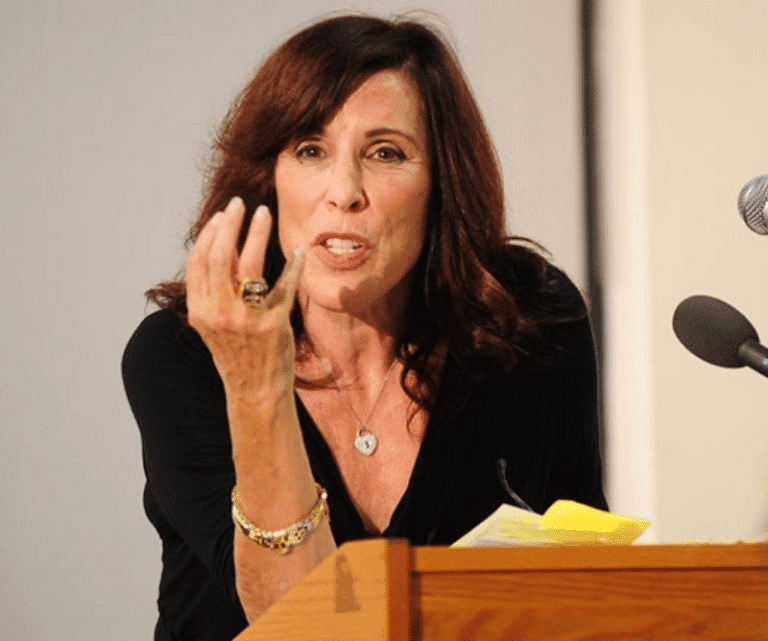
Linda Stein is the Art Editor of On The Issues Magazine. The concepts of Protection, Peace and Parity in Stein’s art, writing and lectures include a sculptural series called "Knights," of body-as-armor, in which she references Wonder Woman and other icons from spiritual and pop culture. More about her work and upcoming exhibitions is at www.lindastein.com.
Also see Film Review: Liberian Women Forge a Real-Life Lysistrata by Jaye Austin Williams in this edition of On The Issues Magazine.
See The Courage of No by Merle Hoffman in this edition of On The Issues Magazine.
Visit The Café of On The Issues Magazine for new stories and updates.
The Cafe
Newest titles:
We’re now taking comments!
Enter the Cafe

CURRENT ISSUE
Winter 2012
Realities of The Waiting Room: Constantly Shifting by Lori Adelman
Anti-Abortion Harassment and Violence Still Stifle Access by Eleanor J. Bader
We're Not Sorry. Still. by Jennifer Baumgardner
The Poet's Eye From Poetry Co-Editor Sarah Browning
Calling Black LGBTQ Institutions: Where Are You? Where is Reproductive Justice? by Jasmine Burnett
Privacy at Stake: Patients, Clinics and Electronic Medical Records by Corinne A. Carey
Can We Choose Move Forward on Reproductive Justice? -- And How? by Ayesha Chatterjee and Judy Norsigian
"Love Means Second Chances": Reproductive Freedom in a Novel by Susan Elizabeth Davis
Satirist's View: Same Old Dilemma, or The Virgin Rebirth by Susie Day
As Access Slides, Feminists Need to "Extract" From Our Self-Help Past by Carol Downer
Abortion: On The Issues Magazine - by The Editors
How Anti-Abortion Protesters Got Me: Letter From a Young Activist by Sarah Flint Erdreich
The Grand Folly of Focusing on "Common Ground" by Gloria Feldt
Before "Roe": Legal Battles, Involuntary Servitude, My Mom by Justine Goodman
Next Generation Access: Medical Students Fill A Void by Mary Lou Greenberg
The Power of Theater: "Words of Choice" Touches Hearts by Alexis Greene
Where the Reality of Abortion Resides: Intimate Wars by Merle Hoffman
Gone Too Far? Reproductive Politics in the Time of Obama by Carole Joffe
Lila Rose: A Sweet Face to Accompany Extreme Anti-abortion Claims by Kathryn Joyce
Glorifying the Fetus While Ignoring the Fetal Environment by Margie Kelly
Reframing Compassionate Care: Of Madame Restell and Other Outlaws by Jeannie Ludlow
Helping Bloggers To Help: Tips for Reproductive Health Organizations by Amanda Marcotte
What To Do When They Say Holocaust by Carol Mason
"Silent Choices": African American Women Open Up on Film by Faith Pennick
Fine Thoughts On Fertilized Personhood by Marge Piercy
Heading Toward Menopause, Still Caring about Abortion by Andrea Plaid
Letter to a Young Activist: Don’t Drop the Banner by Barbara Santee
Redefining Chutzpah: More Bad Ideas to Burden Women by Aram A. Schvey
Sharing the Wealth of Knowledge on Abortion by Ria Sen and The Feminist Press
An Abortion Miracle? Let's Try the First Amendment by Priscilla Smith
Related Stories: Bold Discussions of ABORTION in On The Issues Magazine by The Editors
The Art Perspective: Ursula O'Farrell curated by Linda Stein
Student Think Tank