





















Join On The Issues
Receive information and updates via email.
Intimate Wars
The Life and Times
of the Woman
Who Brought Abortion
from the
Back Alley
to the
Board Room
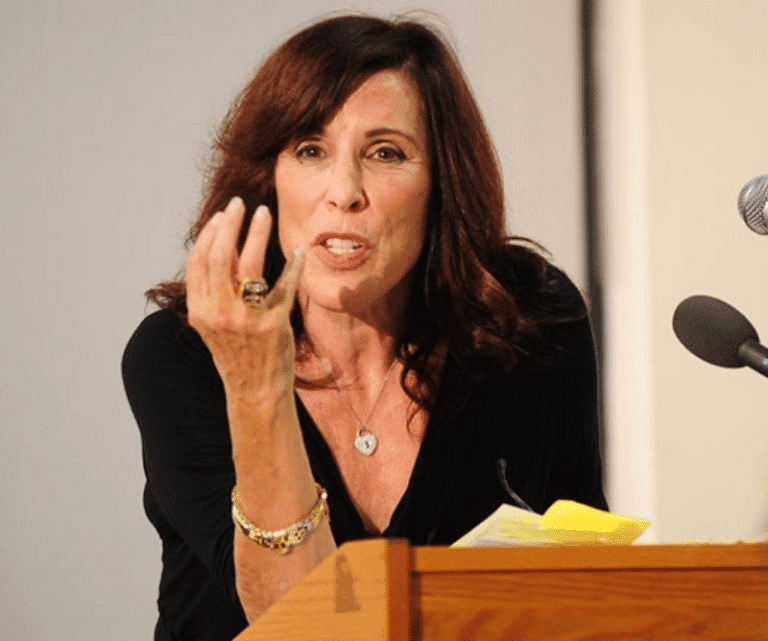
• Merle Hoffman, publisher of On The Issues Magazine
IntimateWars.com
On You Tube
Visit On The Issues Magazine's YouTube ChannelSend us links to your favorite, progressive videos to add to our favorites
Featured Video:

Calling Black LGBTQ Institutions: Where Are You? Where is Reproductive Justice?
by Jasmine Burnett
The Black feminist group, the Combahee River Collective, described its beginnings by saying: "It was our experience and disillusionment within these [other] liberation movements, as well as experience on the periphery of the white male left, that led to the need to develop a politics that was anti-racist, unlike those of white women, and anti-sexist, unlike those of Black and white men."
In this spirit, I'm asking where the Black LGBTQ (Lesbian, Gay, Bisexual, Transgender, Queer) community is on Black women and abortion? This is an important question for me. My identity is as a Black lesbian feminist who has worked with Black gay and lesbian organizations and who works on women's rights from a reproductive justice perspective. A reproductive justice perspective places the woman at the center, along with her right to have a child, not to have a child and to parent a child in safe and sustainable communities.
But it's not an easy question to probe.
I don't ask this question as an accusation, nor is it a question that is being asked of individuals, but it is directed to the institutions that fight for Black LGBTQ liberation and visibility. I have founded, worked and organized with Black LGBTQ organizations that are largely led by Black Gay men. But where and how are Black women's issues prioritized within these organizations and where is the visibility on the issue of Black women and abortion? This is an important question to ask of Black LGBTQ organizations at this time.
Reproductive justice advocates and our communities have all been witnesses to the recent anti-abortion billboards with their racist frames on Black women's lives, claiming to save Black babies. These attacks are not only an attack on Black women's families, but also on Black LGBTQ families. The same messaging that glorifies hate and discrimination in access to jobs, housing, healthcare and safety based on sexual orientation is the same rhetoric that seeks to oppress Black women's access to the full range of reproductive health choices for their lives and families. There is no difference.
The Zuna Institute, a national advocacy organization for Black Lesbians, published a groundbreaking national report in 2010, Black Lesbians Matter: An Examination of Unique Experiences, Perspectives and Priorities of the Black Lesbian Community. This report highlighted in its health focus the importance to Black lesbians of having a child and parenting children. Nationwide, 45 percent of Black female same-sex households include a biological child of one of the partners in the household, while 32 percent of Black male same-sex couples report a biological child present. Also, Black same-gender-loving women may be disproportionately affected by policies that limit benefits for same-sex partners, as well as by anti-gay parenting policies. This is even more significant to the abortion argument considering that Black children are greatly overrepresented in the foster care system and are most likely to be adopted by Black women.
As a people who have an ancestral linkage to slavery in this country, we share in the struggle of being affected: being Black provides individuals with unlimited access to oppression in just attempting to think that, as a human being, you have rights that are protected under the law. Given this connection of our lives, it has become more challenging for me to understand contrasting social concerns. For example, the entire LGBTQ community and our supporters all celebrated the legalization of gay marriage in New York, but while that was happening, three states outlawed or restricted abortion access for women -- Kansas, Idaho and Louisiana -- and there was no push back from the LGBTQ community.
On The Ground
Looking at two Black LGBTQ organizations, national and international, that work on issues related to health gives a better understanding of how the topics intertwine. One is the International Federation of Black Prides, and another is the National Black Justice Coalition.
The International Federation of Black Prides is a coalition of Black Pride organizers formed to promote a multinational network of LGBT Prides and community-based organizations. Its priorities on health issues concern HIV and AIDS, which, indeed, are disproportionately high in the African American community for both women and men.
There are outspoken Black women LGBT allies who are also HIV and AIDS advocates. These include Black women like Dazon Dixon Diallo of Sisterlove, a reproductive justice organization for women that incorporates HIV/AIDS and reproductive justice concerns. Another activist involved in the fight against HIV and AIDS, Hadiyah Charles, is especially committed to working on the integration of sexual and reproductive health and HIV policies, services, treatment and care.
Black women are not silent about this health issue that disproportionately impacts and affects Black women, Black gay men and men who have sex with men (sometimes referred to as "MSM"). It is important that organizations like the International Federation of Black Prides also stand with reproductive health and justice organizations in the fight to protect abortion and reproductive health access for women. The International Federation of Black Prides is a multinational Black LGBTQ membership network that, through the yearly Black pride festivals in this country and across the globe, reach thousands of Black LGBTQ individuals and communities. IFBP holds technical assistance conferences each year where discussions take place on what will be the priority issues for pride organizers. A workshop at the technical assistance conference and subsequently at the Black pride festivals on Black women and abortion access could be the way forward in incorporating the messaging of gender, sexuality and reproductive health access. The federation does have articles on its website that bridge other topics – for example, the visibility of hate crimes and gender, reproductive health cancers and Hormone Replacement Therapy (HRT) used by some lesbians, bisexual women and transgendering female to males – that provide models for expansion on reproductive justice advocacy, as well.
The second organization, the National Black Justice Coalition (NBJC), is a civil rights organization dedicated to empowering Black lesbian, gay, bisexual and transgender people, and has a mission to eradicate racism and homophobia. The group has a policy priority that addresses racism. A statement of support and solidarity taking a stand against the racist statements on the anti-abortion billboards and in support of Black women making our own reproductive decisions could be the first of many steps to connect the battles of gender and sexuality in fighting racism. The National Black Justice Coalition is deepening its advocacy focus on the African American family, putting a face on the Black LGBT community, and fostering a collective effort to accord dignity and respect to all African American families as an important step in individual and community empowerment. This theme is aimed at removing the inequities of policy-based initiatives that weaken families, communities and, ultimately, the country, and should make a special effort to address the important reproductive justice concerns of Black lesbians.
Solidarity Is A Two-Way Street
Black women in the fight for protection of our reproductive rights and justice can no longer be positioned as a casualty of racial, sexual or gender oppression. We have struggled with Black men against racism, while at the same time we have struggled with Black men about sexism within our community. We, as a collective community of African Americans, must do better on issues that directly affect women.
What does all this mean? It means that the voices and struggles of Black women need to be discussed and prioritized in the Black LGBTQ movement. It means that we, as a collective African American community, educate, speak, write on and reflect visible solidarity among Black LGBTQ and reproductive justice organizations. One key step in the path forward is to convene people involved in both reproductive justice and Black LGBTQ organizations to identify ways in which we can mobilize our voices at the places where our concerns meet and intersect.
What this could mean for our community is that Black women who go to clinics to obtain abortion services and Black LGBTQ youth and adults are safe from hate crimes at the hands of those who preach "life," but practice verbal or physical violence that sometimes results in death. It means that there are safe places for our families to thrive and survive.
Ultimately, we, as African American leaders in the fight against racism, sexism and homophobia, have an unique opportunity to shape the standard in how we fight for our right to live and create change. It is our obligation to communities and ourselves to be proactive in making this part of our legacy.
Join the conversation. Leave a comment.
All comments will be reviewed before being posted live. All fields REQUIRED.
The Cafe
Newest titles:
We’re now taking comments!
Enter the Cafe

CURRENT ISSUE
Winter 2012
Realities of The Waiting Room: Constantly Shifting by Lori Adelman
Anti-Abortion Harassment and Violence Still Stifle Access by Eleanor J. Bader
We're Not Sorry. Still. by Jennifer Baumgardner
The Poet's Eye From Poetry Co-Editor Sarah Browning
Calling Black LGBTQ Institutions: Where Are You? Where is Reproductive Justice? by Jasmine Burnett
Privacy at Stake: Patients, Clinics and Electronic Medical Records by Corinne A. Carey
Can We Choose Move Forward on Reproductive Justice? -- And How? by Ayesha Chatterjee and Judy Norsigian
"Love Means Second Chances": Reproductive Freedom in a Novel by Susan Elizabeth Davis
Satirist's View: Same Old Dilemma, or The Virgin Rebirth by Susie Day
As Access Slides, Feminists Need to "Extract" From Our Self-Help Past by Carol Downer
Abortion: On The Issues Magazine - by The Editors
How Anti-Abortion Protesters Got Me: Letter From a Young Activist by Sarah Flint Erdreich
The Grand Folly of Focusing on "Common Ground" by Gloria Feldt
Before "Roe": Legal Battles, Involuntary Servitude, My Mom by Justine Goodman
Next Generation Access: Medical Students Fill A Void by Mary Lou Greenberg
The Power of Theater: "Words of Choice" Touches Hearts by Alexis Greene
Where the Reality of Abortion Resides: Intimate Wars by Merle Hoffman
Gone Too Far? Reproductive Politics in the Time of Obama by Carole Joffe
Lila Rose: A Sweet Face to Accompany Extreme Anti-abortion Claims by Kathryn Joyce
Glorifying the Fetus While Ignoring the Fetal Environment by Margie Kelly
Reframing Compassionate Care: Of Madame Restell and Other Outlaws by Jeannie Ludlow
Helping Bloggers To Help: Tips for Reproductive Health Organizations by Amanda Marcotte
What To Do When They Say Holocaust by Carol Mason
"Silent Choices": African American Women Open Up on Film by Faith Pennick
Fine Thoughts On Fertilized Personhood by Marge Piercy
Heading Toward Menopause, Still Caring about Abortion by Andrea Plaid
Letter to a Young Activist: Don’t Drop the Banner by Barbara Santee
Redefining Chutzpah: More Bad Ideas to Burden Women by Aram A. Schvey
Sharing the Wealth of Knowledge on Abortion by Ria Sen and The Feminist Press
An Abortion Miracle? Let's Try the First Amendment by Priscilla Smith
Related Stories: Bold Discussions of ABORTION in On The Issues Magazine by The Editors
The Art Perspective: Ursula O'Farrell curated by Linda Stein
Student Think Tank