
























Join On The Issues
Receive information and updates via email.
Intimate Wars
The Life and Times
of the Woman
Who Brought Abortion
from the
Back Alley
to the
Board Room
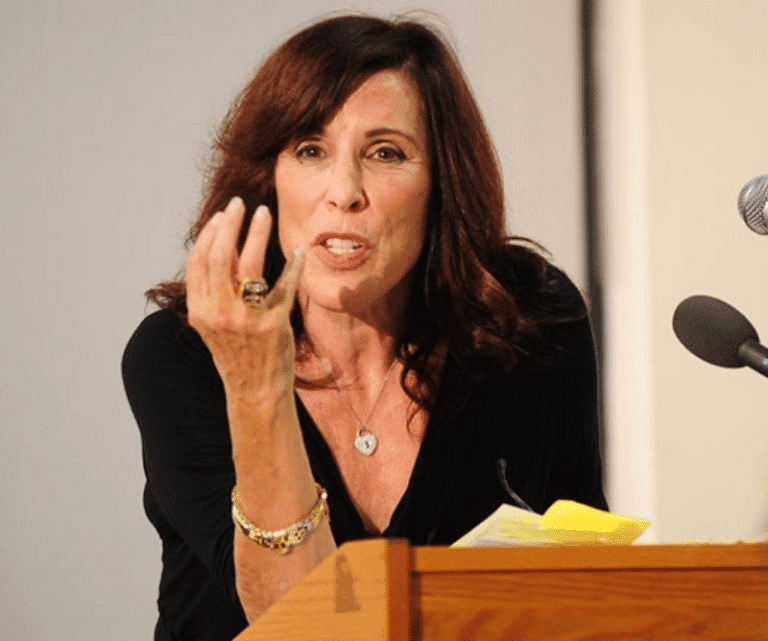
• Merle Hoffman, publisher of On The Issues Magazine
IntimateWars.com
On You Tube
Visit On The Issues Magazine's YouTube ChannelSend us links to your favorite, progressive videos to add to our favorites
Featured Video:

Before "Roe": Legal Battles, Involuntary Servitude, My Mom
by Justine Goodman
I am the daughter of a woman who wrote in 1970 that "involuntary motherhood is slavery." That was 13 years before I was born, and three years before Roe v. Wade was decided.
She made that argument in a federal court brief in the 1969 case of Abramowicz v. Lefkowitz, which challenged New York State's abortion laws. As was true in the rest of the country, abortion in New York was illegal. The slavery argument was based on the 13th amendment to the United States Constitution. It was an intrepid, if lesser, point in the larger litigation.
My mother, Emily Jane Goodman, is a champion of women's rights. Now a trial judge in Manhattan, she was just one year out of law school in 1969 when she was recruited by the civil rights and women's rights activist Flo Kennedy to be part of the legal team that was challenging the New York State abortion law.
Flo Kennedy, Bella Abzug and Robin Morgan were all part of my everyday world when I was growing up. I dressed as Hillary Clinton for Hallowe'en when she was still the first lady of Arkansas. On the first Take Our Daughters to Work Day in 1993, a photo of me, cloaked in my mother's judicial robes, was published all over the world.
Finding Our History
So it was not for my mom's lack of trying that, as I got older, I was mostly complacent about feminism. Sure, I believe in gender equality, and I've always been avidly pro-choice, but it seemed that my mother's generation fought for our rights in the 1970s so that we wouldn't have to. Growing up in the years of legal abortion -- I'm 28 now -- it is unbelievable to me that it was illegal to disseminate contraceptives or have an abortion -- and in my mom's lifetime. But with abortion constantly under fire from the religious right and conservative politicians -- I mean, really, a "personhood amendment"? -- I began to dig into the history of the role played by my mother and her peers.
While Roe v Wade is the subject of an annual parade of events, knowledge of the lawsuits that preceded Roe, like Abramowicz v. Lefkowitz, is elusive, at best. I went to the best source I could find.
"The movement was about breaking free of patriarchal, male-domination in all aspects of life. Having religious institutions -- all male -- and legislatures -- ditto -- tell women that there would be no sexual liberation without the penalty of unwanted children or emotionally and physically risky alternatives was unacceptable," my mother explains over coffee in her living room one recent Sunday night.
But, she adds: "To be honest, until then, I hadn't given a lot of thought to the issue, never having confronted it myself, and not knowing anyone who had needed or had an abortion, as far as I knew. And I hadn't had the political ideology to realize the degree of control that was at work here, of men who obviously would never be pregnant, controlling the lives and bodies of those who would be. And I certainly hadn't really thought much about the punitive aspects -- of the price that a woman might have to pay for her sexual liberation, all of which was now surrounding us."
My mom joined the other lawyers (all women, by the way) to challenge the New York law in court. Lawyers at the Center for Constitutional Rights had already strategized that medical doctors would make the most sympathetic plaintiffs. The argument was that doctors' rights to practice professionally were subject to interference when they could not perform what they and their patients believed to be the proper medical procedure. As a result, Dr. Helen Abramowicz was the first named plaintiff.
But there were also 300 other plaintiffs. The women plaintiffs ran the gamut: married, unmarried; some who had children, others who didn't; some had abortions and some had children they could not afford to raise, whether financially or otherwise.
So many women were involved as plaintiffs that completing all of the formal depositions for the litigation was considered a major challenge. Instead, a plan was developed for a public taking of testimony. "The court suggested we might proceed with taking depositions in this kind of informal way because it would be more practical, and we agreed. We saw that it would have the unintended effect of becoming an organizational tool, because it was widely publicized," my mother explains.
Washington Square Methodist Church in Greenwich Village was eventually selected as the venue. To show the hardships suffered by women as a result of the state's oppressive anti-abortion laws, the lawyers selected 30 representative witnesses. "The prosecutors [on the other side of the case] objected to calling these witnesses, of course, but we proceeded anyway," my mother explained.
"I was in awe of the women who came forward, telling of their experiences of having to place newborn babies for adoption, to be sent away by their families so no one would know they were pregnant; of women who never knew their biological parents because they were placed for adoption by unwed teenage mothers; people who described their abject poverty because they had bigger families than they could afford," she recalls.
Arguing for Women's Freedom
After nearly 30 years on the bench, my mother's current reaction to talking about this subject is not what most of us would call emotional; to her, this is a purely political issue. Still, in listening to her recount some of the testimony from the case, I begin to get a more tangible sense of exactly how physically and emotionally traumatizing an unwanted pregnancy is when you have no freedom of choice.
There were women who described back-alley abortions, blindfolded trips to abortionists who may or may not have been actual doctors. There were some who had been severely damaged by the well-known metal hanger abortions, and others who had to get psychiatrists to certify that they would be suicidal if they gave birth. And there were also women who described their desperate efforts to raise money to leave the country in order to obtain the procedure legally in Puerto Rico or even Japan.
Of course, the stories were only part of the case. There had to be compelling evidence that the statute violated the constitutional rights of the plaintiffs. And that's where my mother's slavery argument came in.
"My argument was that a law that forces a woman to use her body as an incubator makes her a victim of slavery and involuntary servitude," she says. In other words, freedom had to include freedom from childbearing, if that was a woman's preference, and freedom to plan the role that motherhood might or might not play in her life. "I organized some of the few public officials who were on our side, as well as some progressive groups such as Citizens Committee for Children, Women in City Government, the National Medical Committee for Human Rights, to support my brief on compulsory pregnancy as slavery."
In the end, the Abramowicz case was rendered moot when the New York State legislature changed the statute in 1970, making it possible for women to obtain abortions by safe and legal means. But the attention generated by the lawsuit -- making public the testimony of women and doctors who had experienced first-hand the consequences of the existing laws -- was a major step toward the eventual legalization of abortion nationally, as well. In short, it became hard to ignore what these women had to say.
The 13th Amendment argument was not raised in Roe v. Wade, which was decided largely on the basis of the right to privacy under the Ninth Amendment with a reference to the 14th Amendment on equal protection of the laws in all states. Even my mother calls her slavery argument a "very radical idea," and, she says, "I don't think that many other people believed it or believed I meant it. But I certainly did. And still do." Some legal critics, including U.S. Supreme Court Justice Ruth Bader Ginsberg, have pointed out that the challenges to the anti-abortion laws should have been presented and decided on the basis of a woman's constitutional rights, rather than privacy. If that had happened, perhaps the decision would have been less susceptible to erosion by the courts and legislatures, as it has been for nearly 40 years, and continues to be.
My mother and I have shared things all my life, but before I interviewed her for this article, I had only the vaguest sense of the pre-Roe history of abortion. With the current attacks on women's reproductive rights, I now see that this is the time to fight on the basis of our civil rights and the constitution -- including, perhaps, the 13th Amendment ban on involuntary servitude.
robert posted: 2012-01-26 14:54:48
"My argument was that a law that forces a woman to use her body as an incubator makes her a victim of slavery and involuntary servitude," she says. In other words, freedom had to include freedom from childbearing, if that was a woman's preference, and freedom to plan the role that motherhood might or might not play in her life." so let me see if i'm following this logic. a woman should not be "strapped with a child" because it robs her of her "freedom" and essentially makes her a "slave"... but if a man gets a woman pregnant, he can be robbed of his "freedom" and made into a "slave" because he "knew the possible consequences of his actions" and that his life is now at the whim of another is of no consequence because only the woman can decide to be or not be a parent. my... how fair...
zilijada posted: 2012-02-17 12:33:02
when men start going through 9 months of pregnancy, anywhere between 3 and 72 hours of sheer agony of labour, and at least 6 months of breastfeeding... then we'll call it fair... or, alternatively, if every man who "gets a woman pregnant" is legally bound to marry her and provide for her and take on at least 1/2 of the work of caring for the child... we'll call it fair
Join the conversation. Leave a comment.
All comments will be reviewed before being posted live. All fields REQUIRED.
The Cafe
Newest titles:
We’re now taking comments!
Enter the Cafe

CURRENT ISSUE
Winter 2012
Realities of The Waiting Room: Constantly Shifting by Lori Adelman
Anti-Abortion Harassment and Violence Still Stifle Access by Eleanor J. Bader
We're Not Sorry. Still. by Jennifer Baumgardner
The Poet's Eye From Poetry Co-Editor Sarah Browning
Calling Black LGBTQ Institutions: Where Are You? Where is Reproductive Justice? by Jasmine Burnett
Privacy at Stake: Patients, Clinics and Electronic Medical Records by Corinne A. Carey
Can We Choose Move Forward on Reproductive Justice? -- And How? by Ayesha Chatterjee and Judy Norsigian
"Love Means Second Chances": Reproductive Freedom in a Novel by Susan Elizabeth Davis
Satirist's View: Same Old Dilemma, or The Virgin Rebirth by Susie Day
As Access Slides, Feminists Need to "Extract" From Our Self-Help Past by Carol Downer
Abortion: On The Issues Magazine - by The Editors
How Anti-Abortion Protesters Got Me: Letter From a Young Activist by Sarah Flint Erdreich
The Grand Folly of Focusing on "Common Ground" by Gloria Feldt
Before "Roe": Legal Battles, Involuntary Servitude, My Mom by Justine Goodman
Next Generation Access: Medical Students Fill A Void by Mary Lou Greenberg
The Power of Theater: "Words of Choice" Touches Hearts by Alexis Greene
Where the Reality of Abortion Resides: Intimate Wars by Merle Hoffman
Gone Too Far? Reproductive Politics in the Time of Obama by Carole Joffe
Lila Rose: A Sweet Face to Accompany Extreme Anti-abortion Claims by Kathryn Joyce
Glorifying the Fetus While Ignoring the Fetal Environment by Margie Kelly
Reframing Compassionate Care: Of Madame Restell and Other Outlaws by Jeannie Ludlow
Helping Bloggers To Help: Tips for Reproductive Health Organizations by Amanda Marcotte
What To Do When They Say Holocaust by Carol Mason
"Silent Choices": African American Women Open Up on Film by Faith Pennick
Fine Thoughts On Fertilized Personhood by Marge Piercy
Heading Toward Menopause, Still Caring about Abortion by Andrea Plaid
Letter to a Young Activist: Don’t Drop the Banner by Barbara Santee
Redefining Chutzpah: More Bad Ideas to Burden Women by Aram A. Schvey
Sharing the Wealth of Knowledge on Abortion by Ria Sen and The Feminist Press
An Abortion Miracle? Let's Try the First Amendment by Priscilla Smith
Related Stories: Bold Discussions of ABORTION in On The Issues Magazine by The Editors
The Art Perspective: Ursula O'Farrell curated by Linda Stein
Student Think Tank