



















Join On The Issues
Receive information and updates via email.
Intimate Wars
The Life and Times
of the Woman
Who Brought Abortion
from the
Back Alley
to the
Board Room
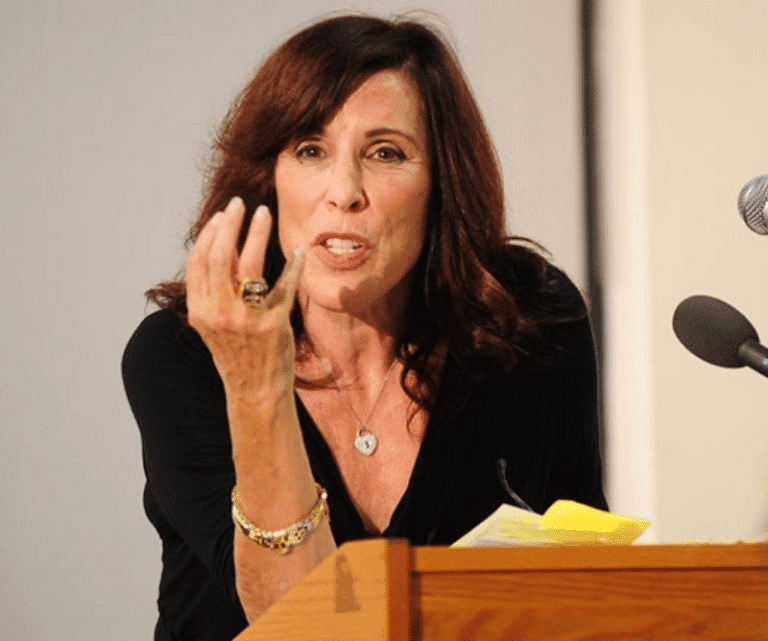
• Merle Hoffman, publisher of On The Issues Magazine
IntimateWars.com
On You Tube
Visit On The Issues Magazine's YouTube ChannelSend us links to your favorite, progressive videos to add to our favorites
Featured Video:

Where the Reality of Abortion Resides: Intimate Wars
by Merle Hoffman
When I first opened a clinic for women's abortion care in Flushing, New York in 1971, women finally had access to safe, legal abortions – even before Roe v. Wade decriminalized abortion across the country. New York State had acted to decriminalize abortion in 1970, so we were already a step ahead. Doctors could now treat patients in a respectful environment, away from the back-alley secrecy and lethal dangers.
I started working on building the clinic as a neophyte, but in my new memoir, Intimate Wars, I describe how, over the next several years, I began to become more and more connected to the work, the women, and from there, social and political activism.
Below is an excerpt from Intimate Wars:
After a few years of directing Flushing Women's [Medical Center], my days at the clinic had begun to feel a little more routine. By then we were seeing fifty women a week, and at that time I was still counseling most of them.
I can't remember how many hands I held, how many heads I caressed, how many times I whispered into how many ears, "It will be all right, just breathe slowly." I saw so much vulnerability: legs spread wide apart; the physician crouched between white, black, thin, heavy, but always trembling, thighs; the tube sucking the fetal life from their bodies.
"It'll be over soon, just take one more deep breath" -- the last thrust and pull of the catheter -- then the gurgle that signaled the end of the abortion. Gynecologists called it the "uterine cry." Over and over again I witnessed women's invariable relief after their abortion that they were not dead, that God did not strike them down by lightening, that they could walk out of this place not pregnant any more: that their lives had been given back to them.
It was the kind of born again experience that often resulted in promises: I will never do this again. I will always make him wear condoms. I will be more careful next time.
It was the very young girls that moved me most. I felt so much rage against the males who impregnated each child—was it her father, her brother, some young boy with no thought for the consequences? The girls, the women, were duly punished for their part of the sex act. But for the boy or man there was no censure, never was.
At times I was filled with a kind of bitter resignation. I knew that I might see each again soon. So many of them were barely more than babies themselves when pregnancy came, unplanned and unwanted. They were innocent and often ignorant, didn't believe they were pregnant until it was too late to deny it, too afraid to ask for help at first. "Maybe it'll go away," they reasoned.
I spent hours counseling husbands, lovers, sisters, and mothers whose fury at their daughters' betrayal needed a kind of salve I couldn't give. "Let her get local anesthesia," they said. "Let her really feel the pain so she knows never to do it again." The daughters' heads lay on my shoulder as I sat on their beds, wiping tears of relief or regret or both, whispering comfort, giving absolution, channeling rage, sharing life.
"I would want to keep this pregnancy, if only…" I learned that it is in the "if only" that the reality of abortion resides. It's there in the vast expanse of a lived life -- the sum of experience, the pull of attachment, the pain of ambivalence. "If only" is a theme with thousands of variations.
If only I wasn't fourteen.
If only I was married.
If only my husband had another job.
If only I didn't give birth to a baby six months ago.
If only I didn't just get accepted to college.
If only I didn't have such difficult pregnancies.
If only I wasn't in this lousy marriage.
If only I wasn't forty-two.
If only my boyfriend wasn't on drugs.
If only I wasn't on drugs.
If only . . .
I bore witness to each woman's knowledge of holding the power to decide whether or not to allow the life within her to come to term.
The act of abortion positions women at their most powerful, and that is why it is so strongly opposed by many in society. Historically viewed and conditioned to be passive, dependent creatures, victims of biological circumstance, women assume the power over life and death with the choice of abortion, an awkward mantle for many. They fall prey to the assumption -- the myth -- that women should not be trusted with this ultimate power.
(From Intimate Wars: The Life and Times of the Woman Who Brought Abortion from the Back Alley to the Board Room by Merle Hoffman)
Danielle posted: 2012-01-18 06:24:05
I strongly agree with abortion. I've never had to g through it so I can't speak from experience but I can only imagine how hard it is. One statement that people who oppose it tend to bring up is, "there are people who can't have children who would love to have them and your just throwing it away". I can only speak for myself, but I for one cannot have children. But I am not against women who chose to abort. They are just as strong as I. I'd rather a woman be responsible enough not to take on a responsibility they know they can't handle or support.
Join the conversation. Leave a comment.
All comments will be reviewed before being posted live. All fields REQUIRED.
The Cafe
Newest titles:
We’re now taking comments!
Enter the Cafe

CURRENT ISSUE
Winter 2012
Realities of The Waiting Room: Constantly Shifting by Lori Adelman
Anti-Abortion Harassment and Violence Still Stifle Access by Eleanor J. Bader
We're Not Sorry. Still. by Jennifer Baumgardner
The Poet's Eye From Poetry Co-Editor Sarah Browning
Calling Black LGBTQ Institutions: Where Are You? Where is Reproductive Justice? by Jasmine Burnett
Privacy at Stake: Patients, Clinics and Electronic Medical Records by Corinne A. Carey
Can We Choose Move Forward on Reproductive Justice? -- And How? by Ayesha Chatterjee and Judy Norsigian
"Love Means Second Chances": Reproductive Freedom in a Novel by Susan Elizabeth Davis
Satirist's View: Same Old Dilemma, or The Virgin Rebirth by Susie Day
As Access Slides, Feminists Need to "Extract" From Our Self-Help Past by Carol Downer
Abortion: On The Issues Magazine - by The Editors
How Anti-Abortion Protesters Got Me: Letter From a Young Activist by Sarah Flint Erdreich
The Grand Folly of Focusing on "Common Ground" by Gloria Feldt
Before "Roe": Legal Battles, Involuntary Servitude, My Mom by Justine Goodman
Next Generation Access: Medical Students Fill A Void by Mary Lou Greenberg
The Power of Theater: "Words of Choice" Touches Hearts by Alexis Greene
Where the Reality of Abortion Resides: Intimate Wars by Merle Hoffman
Gone Too Far? Reproductive Politics in the Time of Obama by Carole Joffe
Lila Rose: A Sweet Face to Accompany Extreme Anti-abortion Claims by Kathryn Joyce
Glorifying the Fetus While Ignoring the Fetal Environment by Margie Kelly
Reframing Compassionate Care: Of Madame Restell and Other Outlaws by Jeannie Ludlow
Helping Bloggers To Help: Tips for Reproductive Health Organizations by Amanda Marcotte
What To Do When They Say Holocaust by Carol Mason
"Silent Choices": African American Women Open Up on Film by Faith Pennick
Fine Thoughts On Fertilized Personhood by Marge Piercy
Heading Toward Menopause, Still Caring about Abortion by Andrea Plaid
Letter to a Young Activist: Don’t Drop the Banner by Barbara Santee
Redefining Chutzpah: More Bad Ideas to Burden Women by Aram A. Schvey
Sharing the Wealth of Knowledge on Abortion by Ria Sen and The Feminist Press
An Abortion Miracle? Let's Try the First Amendment by Priscilla Smith
Related Stories: Bold Discussions of ABORTION in On The Issues Magazine by The Editors
The Art Perspective: Ursula O'Farrell curated by Linda Stein
Student Think Tank