




























Join On The Issues
Receive information and updates via email.
Intimate Wars
The Life and Times
of the Woman
Who Brought Abortion
from the
Back Alley
to the
Board Room
• Merle Hoffman, publisher of On The Issues Magazine
IntimateWars.com
On You Tube
Visit On The Issues Magazine's YouTube ChannelSend us links to your favorite, progressive videos to add to our favorites
Featured Video:

Gone Too Far? Reproductive Politics in the Time of Obama
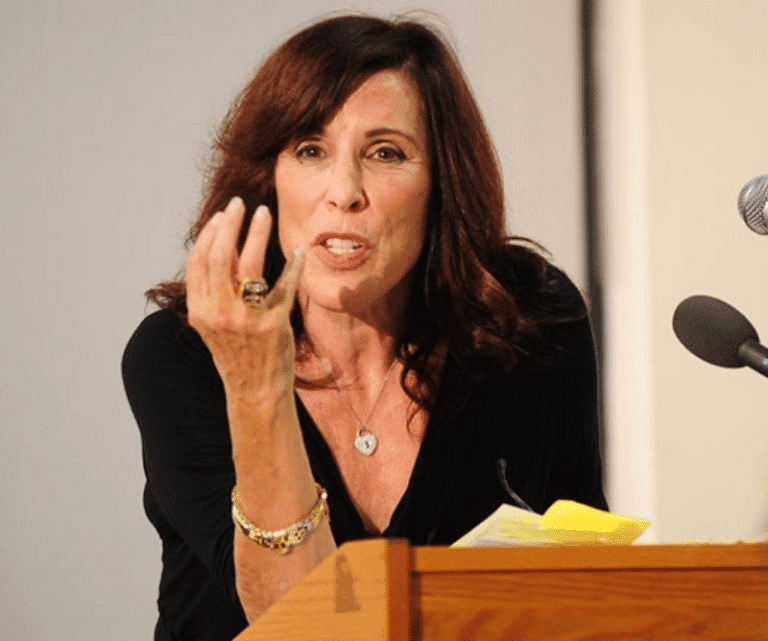
by Carole Joffe
What about abortion gives it staying power as the central issue in domestic politics, even in the period of the worst economic situation since the Great Depression of the 1930s? This is a question well worth pursuing.
I sounded a much more hopeful note in my recent book, Dispatches from the Abortion Wars. The book was started in the administration of George W. Bush, a particularly harsh time for the reproductive justice community. I finished the book in the first months of the presidency of Barack Obama, ending on a note of "cautious optimism" about a turnabout for the fortunes of reproductive health services and particularly for the provision of abortion. Candidate Obama, after all, had forcefully voiced his support for legal abortion, and nothing -- at the time -- seemed to be worse than the endless attacks on reproductive health services (not just abortion, but family planning , sex education, condom distribution for HIV patients and more) that were a key feature of the Bush presidency.
Quoting from the distinguished historian Carroll Smith-Rosenberg's work on an earlier period of abortion conflict in 19th century America, I even speculated that we might be entering a period in which abortion and related issues would no longer be "the central drama of (our) culture." Given the devastating recession that had already become very evident around the time of the 2008 election, I, like many others, reasonably thought that the economy would in fact become the "central drama."
But very soon after the 2008 election, it became very clear that social conservatives were not going away. On the contrary, they seemed more energized than ever. It also became clear that Obama the president was not going to be the forceful defender of reproductive rights that many of his supporters, including myself, had fantasized. Indeed, as early as January 2009, in his first weeks in office, reproductive politics emerged as a factor in the stimulus debates, and the new president blinked. The president's proposal had included a modest provision that allowed states to spend more Medicaid funds on family planning. The Republican House of Representatives leader, John Boehner, publically mocked this provision, asking incredulously what "spending millions for contraceptives" had to do with "fixing the economy." The provision was quickly dropped.
And, of course, many reproductive rights supporters are still smarting over Obama's key concessions to anti-abortion forces, particularly the Catholic Church, in order to win support for his health reform legislation. By late 2011, it was still unclear whether Obama would again cave to the Church's demands for very broad exemptions to the requirement that health insurance plans, under Obama's health legislation, provide contraception without co-pays. But while that was pending, the reproductive health community was stunned when, in a clear bow to politics, the Obama Administration took the unprecedented step of overruling the head of the U.S. Food and Drug Administration and rejecting the agency's recommendation that Emergency Contraception be made available without a prescription to women under the age of 17.
How the Wedge Works
My purpose in this essay, however, is not to simply catalogue all the disappointments that reproductive health advocates have suffered in the Obama administration, an indictment that has been done very well by others. (For the record, an unequivocally positive step that has occurred in the Obama presidency is the Department of Justice's vigorous enforcement of the FACE legislation that protects providers and patients from anti-abortion terrorism, an effort that far outstrips such activity by the Justice Department in the Bush years.)
Despite my hopeful predictions, abortion has maintained its dominance as a wedge issue. This is reflected in the various bills put forward by the new Republican majority in Congress after the November 2010 mid-term election, for example the Orwellian-named "Protect Life" Act, which stipulated that hospitals did not have to offer abortions to women, even in life-threatening situations.
Similarly, in state houses across the country after that pivotal election an unprecedented number of abortion restrictions were introduced by Republican legislators, including bans on abortion after 20 weeks, which clearly violate the Roe v. Wade decision and were intended, in the eyes of many observers, to lure pro-choice lawyers into a test case that could possibly overthrow that landmark ruling. Finally, as politicians compete to be the Republican nominee in the 2012 presidential race, the ante has been raised: in this election cycle, to be acceptable to the anti-abortion base, and to compete with each other, candidates must make clear their opposition to rape and incest exceptions and declare their agreement that "life begins at fertilization."
It is actually not surprising that Republican politicians at all levels insist on keeping abortion front and center, the economic crisis notwithstanding. Abortion is not only the best arrow in these politicians' quivers, in terms of pleasing a crucial segment of the Republican base -- it is arguably the only arrow they have. The reality, as has become evident since Obama's election, is that the Republican party is tied to economic policies -- opposition to infrastructure spending, fanatical devotion to tax cuts for the most wealthy -- that will not create jobs, but, in fact, will destroy them. So abortion has, once again, as I termed it in my book, become a "brilliant distraction" from pressing social problems.
For me, the more complicated -- and fascinating -- question is: Why do voters put up with this endless assault on abortion and contraception (and the corresponding neglect of the economy)? Why, for example, is there seemingly no price to be paid by a politician who is on record as saying its okay for a woman with an ectopic pregnancy to die?
The first, most conventional, answer is that the U.S. is a deeply apolitical country, with a notoriously low voting turnout, compared to other countries. Politicians therefore can take actions that speak to the minority of voters who are deeply engaged, and be confident that the rest of the country is not paying attention. A variant on this general political apathy is that the abortion issue, in particular, has been so divisive and raucous, for so long, that voters simply tune out abortion-related political news, assuming a "pox on both their houses" stance.
In contrast, a third intriguing possibility is that the public's backlash against Right-wing overreach may, just may, finally be at hand. The recent defeat, by a substantial margin, of the "fertilized-egg-as-person"amendment in Mississippi, a highly conservative state where the measure was widely predicted to pass, is suggestive of this. Furthermore, the "defund Planned Parenthood" campaigns, avidly pursued by Republicans both in Congress and in a number of states, have polled very badly with the public. Certainly, in April 2011, when Obama refused to bend to John Boehner's demand that cutting Planned Parenthood and other family planning programs be part of budget negotiations, the president gained -- not lost -- political capital..
It is, to be sure, demoralizing from a reproductive justice viewpoint, that it takes such surreal proposals as making fertilized eggs the moral and legal equivalent of living women, and the all-out demonization of birth control, nearly 50 years after the Supreme Court decision legalizing its use, to make the American people wake up to the threats posed by the fanatics of the Right, and the cynical politicians who do their bidding. And it may well be that these extremist proposals -- rather than causing a backlash -- will make more "normal" restrictions on abortion and contraception look reasonable.
So Bad That It's Good?
But the favor that the zealots now in ascendancy in social conservative circles -- that is, those who oppose all sexual activity except procreative sex within heterosexual marriage -- may have given us is the broad sweep of their proposals. In a society that is marked by deep economic inequality, it is hardly surprising that those women most affected by the assaults on both abortion and contraception are disproportionately poor women of color -- that is, those who have the least political, as well as economic power, and who are most vulnerable to cuts in public services. The unfortunate reality is that, while many of those in the reproductive justice movement work tirelessly on behalf of these women, most in this society -- including other women who also use reproductive health services -- worry little about these marginalized women. Nonpoor women have long been able to assume that contraception and abortion will always be available, as long as one has the means to purchase them.
In that sense, the Mississippi egg-as-person amendment, and similar efforts planned elsewhere, may truly be serving as wake-up calls for the electorate. For it was not just abortions (including lifesaving ones) that were on the line -- but most forms of contraception and IVF treatments (a service that, almost by definition, implies a well-to-do clientele).
Just as the Occupy Wall Street movement has brilliantly framed the economic inequality in the U.S. as existing between the one percent of the super-wealthy and the remaining 99 percent of the population, the current battles in reproductive politics reminds us of another 99 percent -- those American women who have ever used birth control in the context of heterosexual sex. The reproductive legacy of the Obama years may well be this huge group's recognition of itself as a political community. Again, I am cautiously optimistic.
Update: On January 20, 2012, to the relief of many reproductive health organizations, the Obama Administration announced that it would not grant the greatly expanded exemption from contraceptive coverage that had been sought by the U.S. Conference of Catholic Bishops.
Kathryn Karppinen posted: 2012-01-24 12:36:00
Excellent article. As one of the 99% ( a woman who has previously used contraception) I applaud you. I also worry about the women who are in the poor/marginalized catagory, but I also believe ALL women deserve access to both birth control and abortion. Also for those of us who were infertile, IVF fertilization. Thank you for bringing such an enlightening article!
Join the conversation. Leave a comment.
All comments will be reviewed before being posted live. All fields REQUIRED.
The Cafe
Newest titles:
We’re now taking comments!
Enter the Cafe

CURRENT ISSUE
Winter 2012
Realities of The Waiting Room: Constantly Shifting by Lori Adelman
Anti-Abortion Harassment and Violence Still Stifle Access by Eleanor J. Bader
We're Not Sorry. Still. by Jennifer Baumgardner
The Poet's Eye From Poetry Co-Editor Sarah Browning
Calling Black LGBTQ Institutions: Where Are You? Where is Reproductive Justice? by Jasmine Burnett
Privacy at Stake: Patients, Clinics and Electronic Medical Records by Corinne A. Carey
Can We Choose Move Forward on Reproductive Justice? -- And How? by Ayesha Chatterjee and Judy Norsigian
"Love Means Second Chances": Reproductive Freedom in a Novel by Susan Elizabeth Davis
Satirist's View: Same Old Dilemma, or The Virgin Rebirth by Susie Day
As Access Slides, Feminists Need to "Extract" From Our Self-Help Past by Carol Downer
Abortion: On The Issues Magazine - by The Editors
How Anti-Abortion Protesters Got Me: Letter From a Young Activist by Sarah Flint Erdreich
The Grand Folly of Focusing on "Common Ground" by Gloria Feldt
Before "Roe": Legal Battles, Involuntary Servitude, My Mom by Justine Goodman
Next Generation Access: Medical Students Fill A Void by Mary Lou Greenberg
The Power of Theater: "Words of Choice" Touches Hearts by Alexis Greene
Where the Reality of Abortion Resides: Intimate Wars by Merle Hoffman
Gone Too Far? Reproductive Politics in the Time of Obama by Carole Joffe
Lila Rose: A Sweet Face to Accompany Extreme Anti-abortion Claims by Kathryn Joyce
Glorifying the Fetus While Ignoring the Fetal Environment by Margie Kelly
Reframing Compassionate Care: Of Madame Restell and Other Outlaws by Jeannie Ludlow
Helping Bloggers To Help: Tips for Reproductive Health Organizations by Amanda Marcotte
What To Do When They Say Holocaust by Carol Mason
"Silent Choices": African American Women Open Up on Film by Faith Pennick
Fine Thoughts On Fertilized Personhood by Marge Piercy
Heading Toward Menopause, Still Caring about Abortion by Andrea Plaid
Letter to a Young Activist: Don’t Drop the Banner by Barbara Santee
Redefining Chutzpah: More Bad Ideas to Burden Women by Aram A. Schvey
Sharing the Wealth of Knowledge on Abortion by Ria Sen and The Feminist Press
An Abortion Miracle? Let's Try the First Amendment by Priscilla Smith
Related Stories: Bold Discussions of ABORTION in On The Issues Magazine by The Editors
The Art Perspective: Ursula O'Farrell curated by Linda Stein
Student Think Tank